
Blog
How to Start a Handyman Business: 7 Steps That Work

You can fix a leaking tap, hang a door and patch drywall, and friends already call you before they call anyone else. Turning that into a handyman business takes less money than most trades, but it does take a plan: what you’ll offer, what the law in your area allows, how you’ll price jobs and how customers will book you.
This guide walks through how to start a handyman business step by step, for a new handyman business owner, from choosing your services to landing the first ten customers. It’s written for a solo handyman or a small team, anywhere in the world, with US examples where rules differ by place.
Key takeaways
- Start with a short list of services you do well and can price confidently. Say no to the rest for now.
- Check licensing before you take paid work. Many places limit what you can do without a contractor’s license.
- Price with a minimum charge and written estimates, never verbal guesses.
- Make booking easy: a simple website, a Google Business Profile and a way to send estimates and invoices from day one.
In this guide
- Step 1: Decide what kind of handyman business you’ll run
- Step 2: Check licenses and permits where you work
- Step 3: Set your prices
- Step 4: Get the tools, the vehicle and the paperwork
- Step 5: Make it easy to book you
- Step 6: Win your first ten customers
- Step 7: Plan for growth
- The easier way to run it: Handyman Booking OS
- FAQ
- Your first week
Step 1: Decide what kind of handyman business you’ll run
“Handyman” covers a lot. Before anything else, write down the jobs you’ll actually offer. A focused list is easier to price, easier to market and keeps you away from work that needs a license or a specialist.
Good starting handyman services for most new handymen:
- Furniture assembly and TV or shelf mounting
- Door, lock and cabinet repairs and adjustments
- Drywall patching, caulking and small painting jobs
- Fixture swaps (a faucet, a showerhead, a light fitting) where local rules allow
- Small carpentry: trim, skirting, shelving and loose stair rails
- Gutter cleaning, fence and deck repairs, pressure washing
Then write a one-page business plan: your services, your customers, your service area, your prices and what you need to earn. It doesn’t need to impress a bank; it needs to keep you focused.
Who are you for? Homeowners book small jobs and pay quickly. Landlords and property managers send repeat work but expect fast turnaround and tidy invoices. Real estate agents need pre-sale fixes on tight deadlines. Pick one or two groups to aim at first; it makes every later decision simpler.
Keep a “not yet” list: jobs you’re asked about but don’t offer. When the same request comes up five times, it’s a sign to add the skill, the tool or the license.
Step 2: Check licenses and permits where you work
This is the step people skip, and it’s the one that can cost you. Rules depend on where you work, and they often turn on the size of the job and the type of work.
A US example: in California, someone without a contractor’s license may only take jobs where the total price, labor and materials included, is under $1,000, with no employees and no building permits needed. That limit rose from $500 on January 1, 2025, under Assembly Bill 2622. Other states set different limits, and some require a license for any paid work. Outside the US, check your city or regional authority.
Almost everywhere, electrical work, gas and most plumbing beyond simple swaps need a licensed trade. When in doubt, refer it out and keep the customer happy.
What to sort out before your first paid job:
- Choose a business name that says what you do and where (for example “Northside Home Repairs”), check nobody nearby uses it, and grab the matching web address.
- Register your handyman business in the form your country or state requires (sole proprietor, LLC or local equivalent) and get any local business licenses.
- Get handyman insurance. General liability insurance protects you if you damage a customer’s property. Many property managers won’t hire you without a certificate.
- Open a business bank account so taxes and bookkeeping stay clean.
- Know your tax obligations, including whether you need to charge sales tax or VAT on labor or materials where you are.
Step 3: Set your prices
Most handymen use one of three models, and many mix them:
| Pricing model | How it works | Best for |
|---|---|---|
| Hourly rate | You charge for time on site, plus materials | Jobs you can’t scope in advance (repairs, troubleshooting) |
| Flat rate per job | One price for a defined task, such as “mount a TV up to 65 inches” | Repeat jobs you know well; customers like knowing the price |
| Minimum charge | A minimum for any visit, often equal to one or two hours | Protecting you from 15-minute jobs across town |
To find your hourly rate, start from what you need to earn in a year, add your overhead costs (insurance, vehicle, tools, phone, software, taxes), and divide by the hours you can realistically bill. Many new handymen bill far fewer hours than they work, because travel, quoting and buying materials eat the day. Then compare your number with what local handymen charge, and adjust.
Whatever model you choose, put the price in writing before the work starts. We cover exactly what to include in our guide to writing a handyman estimate.
Step 4: Get the tools, the vehicle and the paperwork
You don’t need every tool and piece of equipment on day one. Tools and equipment are where many new handymen overspend: buy for the services on your list, rent specialist tools for the odd job, and upgrade as the work comes in.
The paperwork matters as much as the tools:
- An estimate format with your business details, a clear scope, the price and what isn’t included.
- An invoice format with numbering, payment terms and any tax lines your area requires.
- A job record for each customer: address, what you did, photos and what they paid.
Keeping these consistent from your first job makes you look professional and saves hours at tax time.
Step 5: Make it easy to book you
Customers hire the handyman who answers first and makes the next step obvious. Three things do most of the work:
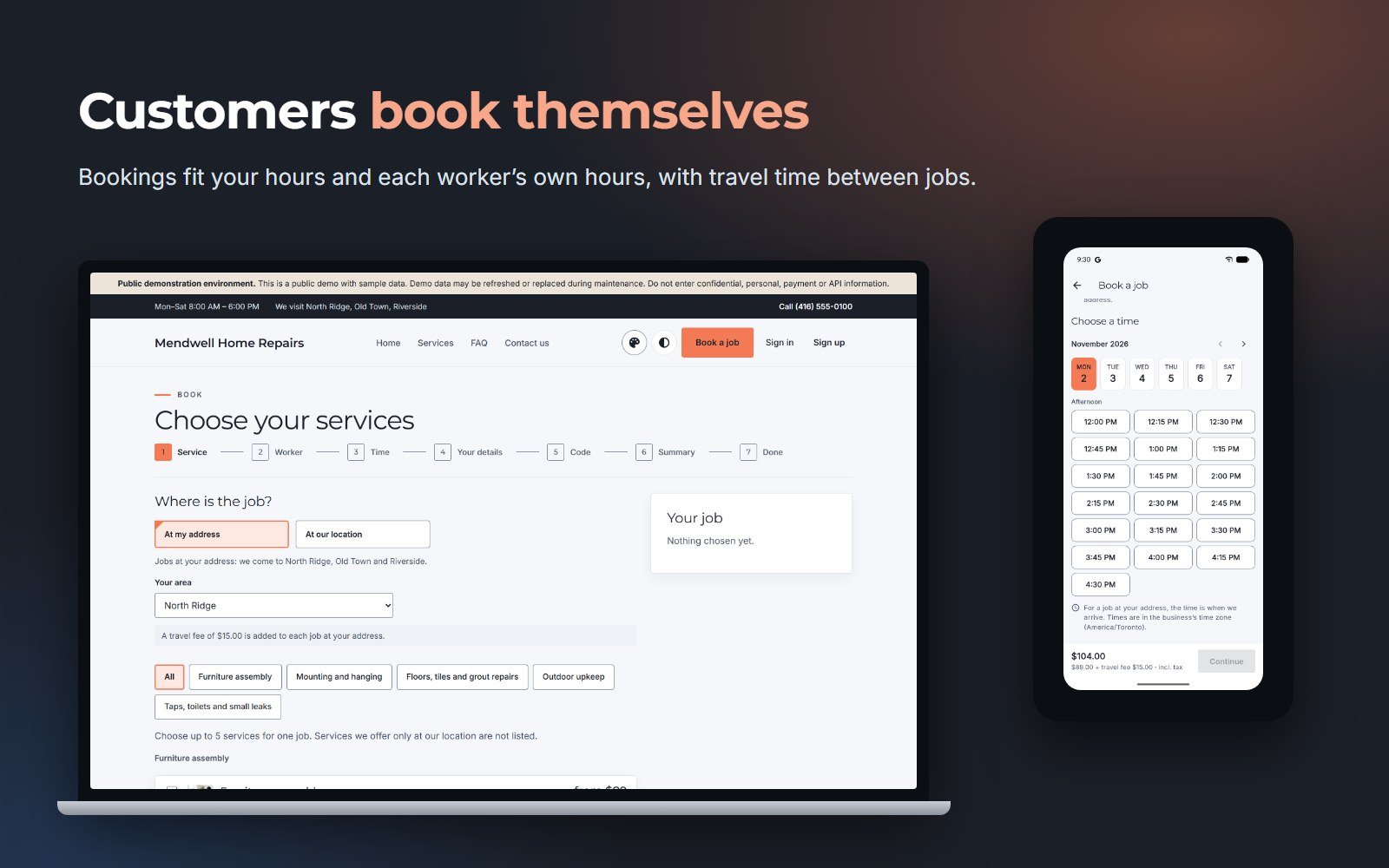
- A simple website that lists your services, the area you cover and a way to book or request an estimate. A booking page that only offers times you’re actually free beats a contact form that leads to phone tag.
- A Google Business Profile. It’s free, and it’s how people find “handyman near me”. Add your service area, hours, photos of real jobs and your phone number.
- A way to send estimates and invoices from your phone, so you can quote on the spot and get paid the day the job is done.
Step 6: Win your first ten customers
Your first customers usually come from people who already trust you. Start there and build outwards:
- Tell neighbors, friends and family what you now offer, with a business card or a message they can forward. Word of mouth is still how most new handymen get going.
- Contact two or three local property managers and real estate agents. Offer to handle small make-ready jobs quickly.
- Join local community groups and answer repair questions helpfully, without a hard sell.
- After every job, ask for a review. A handful of recent reviews on your Google profile changes how often you’re called.
Look after the first customers well: repeat business from a landlord with ten units is worth more than ten one-off jobs. Track where each job came from. After a month you’ll know which channel deserves more of your time.
Step 7: Plan for growth
When you’re turning work away, it’s time to think about a second pair of hands. Before you hire, check what your local rules say about employees (in California, for example, hiring workers takes you outside the handyman exemption), and set up your systems so a helper can see their jobs, the customer’s address and what to do without calling you every time.
This is also when spreadsheets and paper notes start to fail: double bookings, lost estimates and unpaid invoices nobody chased.
The easier way to run it: Handyman Booking OS
We built Handyman Booking OS for small businesses at exactly this stage, when you start your handyman business properly or outgrow the paper diary: one small home-repair business that sends its own workers to customers’ homes. It’s never a marketplace, and there are no commissions.
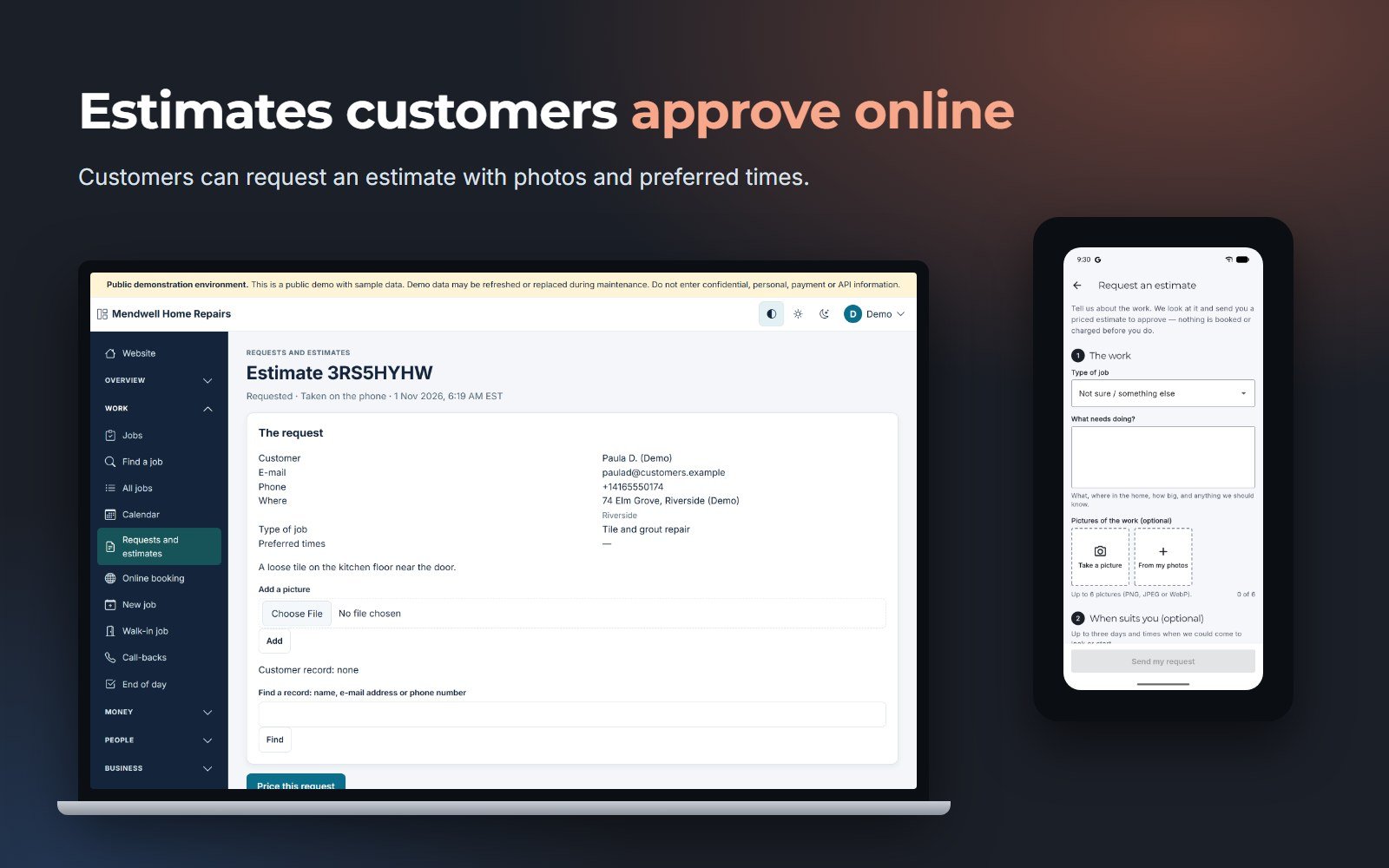
- Customers book on your own branded website, in one of three themes, and request estimates with photos.
- You send versioned estimates that customers approve online, and added work needs their approval before it’s done.
- A worker can’t be booked twice for the same time, travel time between jobs included.
- Your workers get their jobs in one app for customers and workers; they close a job with photos, notes and the customer’s completion code.
- Invoices carry your business name, numbering and tax lines, with deposits, partial payments and online payment through PayPal, Stripe or Razorpay on your own accounts.
OsDot™ · Own the OS. Run Your Business.
Handyman Booking OS
- Your website with booking, estimates, workers’ jobs and invoices
- One Flutter app for your customers and your workers
- Buy & Own from $67 one-time, with the full PHP and Flutter source
- Or a Hosted Plan from $12 a month: we set it up and host it
FAQ
How much does it cost to start a handyman business?
Many people start with tools they already own, so the main costs are registration, insurance, a reliable vehicle and some software. Add up those local prices before you launch, and keep a few months of running costs aside while the work builds up.
Do I need a license to be a handyman?
It depends on where you work and what you do. Some US states allow small jobs without a contractor’s license, such as California’s under-$1,000 limit, while others require a license for most paid work. Electrical, gas and major plumbing work almost always needs a licensed trade.
What services should a new handyman offer?
Start with jobs you do well and can price confidently, such as assembly, mounting, small repairs, drywall patching and painting. Add services when customers keep asking for them and you have the skills and any required license.
How do handymen get their first customers?
Through people who already trust them: neighbors, friends, local property managers and real estate agents. A Google Business Profile and early reviews then bring in people searching for a handyman nearby.
Should a handyman charge hourly or by the job?
Both work. Flat prices suit jobs you know well, and an hourly rate with a minimum charge suits repairs you can’t scope in advance. Whatever you choose, give the price in writing before you start.
Your first week
Write your service list and your “not yet” list, check the licensing rules for your area, and price your five most common jobs. Then set up the basics that let customers book you without calling: a website or booking page, a Google Business Profile, and an estimate you can send from your phone. Do those, and you’re in business.
Want more guides for small service businesses? Join the OsDot newsletter.